This blog has moved

This blog has re-located to Chester

Friday, 26 November 2010

“Bike Snob” Review

bike-snob-book-cover[1]

As a long-time reader of the BikeSnobNYC blog, I decided to snap up a copy of Eben Weiss’s book, “Bike Snob,” whilst at Waterstones a few days ago. The book is an enjoyable read for anyone who is already a cyclist, the Guide to Cycling Tribes section will no-doubt bring a smile to anyone who spends a reasonable amount of time in the saddle. The book, in parts could persuade a non-cyclist of what those of us who do cycle get to experience when we ride, from the obvious advantages of cycling as transport in dense urban locations to the less practical aspects of cycling which can be troublesome to articulate to our non-cycling friends. Whilst this blog is not particularly concerned with sport-cycling, Weiss describes the enjoyment which competitive cycling brings him in a way even the most utilitarian cyclist can appreciate.

The book has a very American flavour to it, which is to be expected as it was written by an American. In terms of transport policy, particularly the relationship between motorists and cyclists we in the UK are much closer to the USA than most of the rest of the European countries, sadly. This is in part due to Britain being resistant to some of the best things the EU has to offer. Cycling as transport is inferred throughout the book but rarely specifically mentioned. The problems with motorists brought up in the book will be instantly familiar to anyone who has ridden a bike on the road in the UK. Weiss is known to be pro-helmet but takes the moderate approach of saying that “If it’s between riding a bike without a helmet and not riding a bike, you’re better off just riding the bike,” which I can respect, although my personal view is that if it is a choice between riding a bike with a helmet and not riding a bike, you’re better off riding with a helmet. He also points out the folly in relying on a helmet instead of things such as your brain and in the case of hipsters, brakes and does so in a moderate manner which is unlikely to alienate readers with different viewpoints.

This book could make a great Xmas gift for an experienced cyclist but the talk of pain and traffic danger could be off-putting to a non-cyclist you are perhaps hoping to inspire, which is a shame considering some of the positive, inspirational content of the book. Overall I would definitely recommend it.

approve

Thursday, 25 November 2010

It’s always dark

If you work office hours you may have noticed that it is dark during almost all of your free time. If you want to cycle during your free time this means you need some lights. This year I am fortunate enough to own more bikes than this time last year (when I only owned a single bike, a hybridised mountain bike at that). This has the added advantage of giving me more experience with different kinds of lights, experience I am happy to share.

Battery Lights:

Battery lighting I have used falls roughly into two categories; lighting for you to see with, and lighting to ensure you are seen by others.

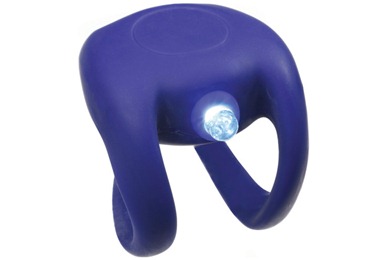
Lighting to be seen by is sufficient to discharge your legal obligation, in well lit urban areas it will also be enough for you to get by. A popular example of lighting to be seen by are Knogs, also known as “Hipster Cysts.”
knog-frog-led-front-light[1]

The Knog lights are basically only as effective as the £2 blinkies you can get from Tesco, but do not require you to attach a mount to your bike.

Unlike lighting to be seen, lighting to see with used to mean halogen lamps. Halogen lamps are bright and produce a lovely warm light but because batteries run out, ideally it is best to use a more efficient method to produce light with batteries. At present this takes the form of LEDs. Halogen lamps powered by batteries are still available and may even seem like a good deal, but any money you save will be paid for with batteries and often shoddier build quality. Currently I am using Edinburgh Bicycle Co-operative’s Revolution Vision set:

00009807[1]

The front lamp is a 1 watt LED with a re-assuring aluminium exterior. The beam is  relatively wide for an LED, although the light it produces is a cold blueish-white which is harder to see by than the yellow of a halogen bulb. The lamp also has a flash mode for when you are more concerned with being seen than with illuminating the path ahead. Replacement mounts are available for the front lamp making it easy to share one between several bikes (as I do with my Yuba Mundo and Raleigh Twenty). The rear light comes with 4 flash patterns in addition to the steady state flash. Sadly replacement mounts are not available for the rear lamp, although the EBC catalogue currently residing in my bathroom suggests the rear light has recently undergone a redesign which may filter through to the shop stock soon.

I also have a permanent rack-fitted light/reflector on the Yuba Mundo which is useful if I am caught out after dark:

IMAG0286%5B5%5D[1]

Dynamo Lights:

Dynamo lighting is generally powerful enough to fall into the “to see by” category (apart from the rear lights for which being seen is the only purpose). Back in July I purchased my first ever dynamo lamp thanks to some advice from LC. I had owned a dynamo hub for a while before that, but I was initially more interested in the drum brake and the possibility of using the dynamo to charge my phone. The lamp I ended up with is a Busch and Muller Lumotec Retro (with standlight and switch):

p3036_250[1]

CIMG2172%5B5%5D[1]

Shown here on the bike before I installed the new tyres, also conveniently doubles as a reflector to make the bike street-legal. 

Because the dynamo provides an effectively inexhaustible source of power, halogen lamps become feasible once more. Whilst they are less durable than LEDs, they do produce a warmer, yellowish light which I find easier to see by, and the brightness is generally greater than that of my LED battery lamp and the beam is cast wider which enhances my visibility to others. The lamp includes an LED standlight, which on its own is about half as powerful as my battery-powered LED lamp. This is designed to ensure you remain visible even when stationary or at very low speeds.

IMAG0578

This dynamo lamp is couples with a battery-powered permanent rear light which I originally considered replacing with a dynamo equivalent. In the end I decided to keep the existing light due to its low power consumption compared to a front light. So far I’ve had a few hundred hours out of the pair of AA batteries which came with the bike.

At present I do not have any experience with bottle dynamos, although Ian at Lazy Bicycle Blog has one on his new bicycle and seems positive about it. I am currently considering adding a bottle dynamo and lamp to the Yuba Mundo. I have become accustomed to the superior light level produced by the lamp on the DL-1 when riding in total darkness and after spending £4 on batteries a few days ago, the initial outlay doesn’t seem too bad anymore. It will also free up the battery lights for exclusive use on the Twenty. Whilst I am happy with my hub dynamo I favour the bottle dynamo approach on the Yuba Mundo because of the disk brakes. The only disk-brake compatible dynamo hubs are Shimano’s, and they use Centerlock mounts for the rotors. This would mean replacing my rotor with a Centerlock version (at an extortionate price for a piece of metal) or buying an adapter which may cause further problems.

Depending on the type of riding you do I would advise using dynamo lighting over battery lighting, at least for the front of the bike. A dynamo front lamp will be bright enough to illuminate the way when riding in total darkness. Whilst the initial outlay may seem high, the level of illumination provided is significantly higher than a £25 pair of LED lights, the battery won’t run out at an inopportune moment and you won’t have to continuously spend money on batteries. If most of your riding is on well lit streets and you are happy to have lights merely to be seen, cheap LED blinkies should suffice.

Wednesday, 24 November 2010

The Guv’nor

I noticed a Pashley Gun’nor in the parking shed at work earlier this week and decided to snap some pictures:

IMAG0567

IMAG0576

IMAG0568

IMAG0571

Plenty has been written about the Guv’nor elsewhere online, but upon seeing one in real life a few things stuck me:

The Guv’nor is a very pretty bike, cream Delta Cruisers, leather grips, Championship B17 saddle and the lugged frame all come together to make a very attractive bicycle.

The Guv’nor however, is basically an ornament. It is a three-speed bicycle sold for £800 without any of the practical accessories you would get with other Pashley models such as even the basic £500 models of the Roadster and Princess. £600 would get you basically the same bicycle (with the handlebars flipped) including dynamo front light, battery rear light, mudguards, chainguards, a rack, a frame-fitting lock, a basket (on the ladies’ model), a stand and an extra two gears, in the form of the Roadster Sovereign or the Princess Sovereign.

The Guv’nor was likely aimed at collectors rather than as a bike to ride to work on, and I can see its appeal as an ornament, almost a museum piece. It does seem odd however, that someone would choose this over the Roadster Sovereign as a bike for general transportation. It seems to be a case of style over substance, much like the time an Edinburgh Bicycle Co-operative salesperson suggested a rackless, lightless, chainguardless, mudguardless, kickstandless and possibly brakeless fixed gear bicycle would be better for “pottering around town,” than the Pashley Roadster Sovereign, despite the prices of the two bikes being nearly the same. Seems like a case of style over substance.

Tuesday, 23 November 2010

Rush Hour Ride 2

In October I rode to Rochdale during rush hour. Yesterday I made the same journey again, although this time due to the time change and the time of year it was dark the whole way there.

View Larger Map

The route was the same as previously but the change in conditions led to a pronounced increase in the douchebaggery of motorists. Thanks in part to sport-cycling lobbies I cycled in the only viable manner, vehicularly, due to a lack of any useable infrastructure. Sadly, lobbies such as the CTC represent members who are largely interested in preserving their right to the road for those Sunday club rides. There is nothing wrong with wanting to be able to go on Sunday club rides, but for a hobby/sporting lobby to inform government policy on something which is primarily a mode of transport is really very detrimental to cycling. Imagine if the government listened to the lobbying on the FIA on motoring matters, we might have an F1 circuit in every city but private motor vehicles would not even be allowed on public roads (which would be great).

On the ride there I was recklessly endangered by motorists numerous times, the worst of whom overtook me at a set of lights which had turned amber as I was riding through them. The driver of MJ51 HXC sped through the same set of lights after they had turned red and then overtook me with mere millimetres to spare. I happened to catch him at the next set of lights and firmly but civilly challenged him about his behaviour. He wound down the windows leading to the following productive exchange:

Me: You nearly killed me back there, that overtake was really dangerous.

Neanderthal: You were riding in the middle of the fucking road.

Me: I have every right to ride in “The middle of the fucking road.”

Neanderthal: Do you want me to fucking punch you?

Me: Yeah, I’m sure you’re going to do that.

Neanderthal: I’ll get out of this car and fucking knock you out.

Me: Sure, go on then, I’m sure you will.

[Neanderthal Drives off]

If it were not for the recent experiences of The Cycling Lawyer I would have reported the incident to the Police. Seeing as cyclists now know that the Police aren’t interested in upholding the laws which are designed to protect them, I decided to allow the exchange to become less civil. What is most worrying to me is that his defence for his reckless driving was that I was riding in the middle of the lane, which I am allowed to do by statute. He is merely licensed to use the roads based on his ability to behave appropriately and he should behave as such. The Police and CPS could do with reminding of that fact too.

The other main reckless motorists were a Ring and Ride driver who overtook extremely dangerously and another bad overtake by a private vehicle. Someone tried to cut me up whilst coming to a stop at a set of lights, they tried to squeeze me towards the kerb. This occurred at a very low speed so I decided it would be safe for me to refuse to give in to this bullying and they were forced to stop and before finishing the cutting-up manoeuvre to avoid scuffing their paint. One of the most annoying incidents was at Big Lamp roundabout in Shaw:

BigLamp[1]

Image courtesy of Wikipedia.


View Larger Map

After going through the above ordeals I was understandably a bit less forgiving than usual. Roundabouts are inherently anti-cyclist, tackling them is very difficult for many cyclists because of the speed required to get through a roundabout in relative safety, combined with the observation that almost no-one in any vehicle seems very sure about what they are supposed to do on a roundabout. I was attempting to take the second exit when two lanes of cars waiting at the next road decided that because I was only a cyclist they would attempt to forcibly steal my right of way. This has taught me a new cycling top tip which I may not have discovered had it not been for my pre-existing exasperation; Screaming, “For fuck’s sake!” at the top of your lungs is necessary and sufficient to stop motorists from stealing your right of way on roundabouts.

At around 10 pm I made the return journey. The lack of cars made the return trip an absolute delight, I was tired but made better time than on the way there. It seems obvious now that the solution to Manchester’s traffic woes is to remove private motor vehicles from our roads. When I got home I noticed my day total on the odometer was 59 km, pretty good for a work day.

Wednesday, 17 November 2010

DfT victim-blaming campaign update

In addition to myself and several other cycling bloggers picking up on the DfT’s backwards approach at road safety, Road.cc also noticed it.  Unlike the rest of us (so far) they have gotten a reply from Mike Penning, the minister “Road Safety.”

“This game is part of a range of educational materials designed to give children the skills they need to stay safe on the roads as they become more independent.

“It is nonsense to suggest that, simply by explaining the consequences of different behaviour, we are attributing the blame for accidents to anyone. I am clear that everyone on the road has a role to play in creating a safe environment whether they are driving, riding, cycling or walking.”

It is easy to get the impression that Mikey hasn’t actually had a look at the site, or if he has it is a long time since he saw the outside world not through a windscreen.

“Tory MP Mike Penning claimed £7,978 in car mileage, although his Hemel Hempstead constituency is less than 30 miles from London.”

Based on the estimates from the BBC, this would place him doing around 30,000 miles per year.  But it is not as if this could possibly distort the minister’s perspective on how much of the burden of responsibility for safety should be placed on motorists…

Friday, 5 November 2010

Raising The Bar

The handlebar that is.  A long time ago I replaced the fork on the Yuba Mundo with one which had tabs for mounting a disc brake.  The new fork has a threadless steerer, the whole arrangement is very sturdy and heavy-duty which is what I wanted, but ever since then the handlebar has felt just that bit too low.  Unlike with a quill stem, you cannot easily raise the handlebar with the threadless system. My lazy solution to this has been to have the saddle a little bit lower than is ideal to compensate, until now that is.  I picked this up from Edinburgh Bicycle Co-Operative on a whim.

CIMG2211

Designed to allow that little bit more height adjustment when using a threadless fork.  I decided to document the installation for the benefit of others.

CIMG2212

I unscrewed the compression bolt from the top cap of the Yuba Mundo headset and removed the bolt and cap.

CIMG2213

The star-nut is visible inside the steerer tube.  Next I unscrewed the clamping bolts on the stem until they were loose enough to allow me to remove the stem.

CIMG2214

Here is the exposed steerer tube after stem removal. I had to replace the headset spacer seen resting on the top bearing race with a slightly thicker one due to the difference in size between the original stem and the stem riser which was to go in its place.

CIMG2219

The stem riser was installed in the same (albeit reversed) manner the stem was removed.  The stem was then clamped onto the stem riser, around 5 cm higher than it was originally.

The solution isn’t exactly elegant, but it is practical, which is what the Yuba is really all about.  I will test ride the bike with the new handlebar position soon and report on how much of a difference it makes.

Thursday, 4 November 2010

Yuba Weekend

Friday the 29th was Halloween Critical Mass.  This time I decided to take a good friend with me on the back of the Yuba.  This was easier than I expected, but meant I couldn’t realistically take any pictures.  Luckily, as one of the biggest Masses of the year, there were plenty of other people taking pictures:

tumblr_lb2tsh6RQM1qc5onx[1]

tumblr_lb2u2gIEFb1qc5onx[1]

Both pictures courtesy of Papergirl Manchester, an art project using Massers as a means to deliver art to the public.  There was also a performance by the Spokes dance troupe.

I also managed to find a picture of our group at the starting point, courtesy of Spinneyhead:

5126557674_c022f9d400_b[1]

Sadly the Yuba isn’t actually visible, but the group of us can be seen in the foreground.

The ride was longer than usual and ended in Platt Fields for drinks and a BBQ.

The next day, I attended an interesting Halloween/bonfire night amalgamation.  Basically costumes, drinks and fire.  I decided to use the Yuba and the availability of firewood on the Fallowfield Loop to contribute towards the bonfire.

IMAG0539

IMAG0537

Yuba Mundo loaded with brittle, long-dead wood.

IMAG0541

The fire lasted long into the night.